


R.D. Plex
A Herbal Tonic For Mind & Body
Syrup
Reproductive System
Immunity
₹85₹9410% OFF
Pack Size
Qty
In Stock1
R.D. Plex
₹85
Third-party testedRegularly certified & audited
GMP-certified facilityManufactured under audit
Free shippingOn orders ₹499+
Check Delivery
Enter your pincode to check if delivery is available to your area.
An Ideal Combination For Protein, Calcium, Vitamin & Minerals.
R.D. Plex syrup is a herbo-mineral formulation recommended in physical tiredness, weak immune system, and in a deficiency of essential elements.
- Provides essential micro-nutrients & trace elements to enhance cellular nourishment.
- Especially recommended for recovery after long standing illness.
- Strikes against loss of memory, regulates nervine function.
- An effective combination for improving memory, helps to attenuate stress, anxiety.
- Initiating growth & mental development for all age.
Full Transparency
What is inside — and why
Every ingredient listed. Nothing hidden.
Ingredient Ledger
 Ingredient 1: Withania Somnifera / Ashwagandha root
Withania Somnifera / Ashwagandha root
lowering cortisol levels. It provides actionable relief for chronic stress and anxiety, enhances athletic endurance and muscle recovery, and promotes deeper sleep quality
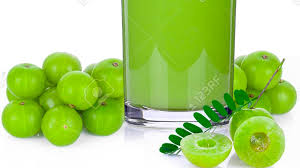 Ingredient 2: Phyllanthus emblica / Amla fruit
Phyllanthus emblica / Amla fruit
boost immunity, improve skin and hair health, aid digestion, and support heart function
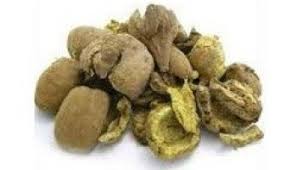 Ingredient 3: Terminalia bellerica / Baheda Fruit
Terminalia bellerica / Baheda Fruit
spanning digestive, respiratory, and dermatological applications
Terminalia bellirica, known as bahera, beleric or bastard myrobalan, is a large deciduous tree in the family Combretaceae. It is common on the plains and lower hills in South and Southeast Asia, where it is also grown as an avenue tree. The basionym is Myrobalanus bellirica Gaertn.. William Roxburgh transferred M. bellirica to Terminalia as "T. bellerica (Gaertn.) Roxb.". This spelling error is now widely used, causing confusion. The correct name is Terminalia bellirica (Gaertn.) Roxb.
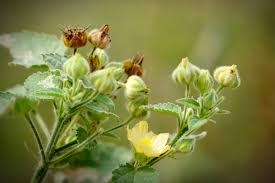 Ingredient 4: Sida cordifolia /Bala
Sida cordifolia /Bala
natural tonic to boost immunity, relieve joint pain and inflammation, support respiratory health (such as asthma and bronchitis), and manage nervous system disorders.
Sida cordifolia is a perennial subshrub of the mallow family Malvaceae native to India. It has naturalized throughout the world, and is considered an invasive weed in Africa, Australia, the southern United States, Hawaiian Islands, New Guinea, and French Polynesia. The specific name, cordifolia, refers to the heart-shaped leaf.
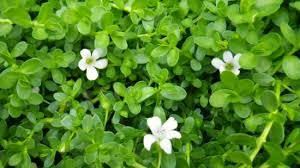 Ingredient 5: Bacopa monnieri / Brahmi
Bacopa monnieri / Brahmi
Boost Cognitive Function, Reduce Stress & Anxiety, Promote Hair Health
Bacopa monnieri, also known as water hyssop, brahmi, thyme-leafed gratiola, herb of grace, and Indian pennywort, is a perennial, creeping herb native to wetland areas globally.
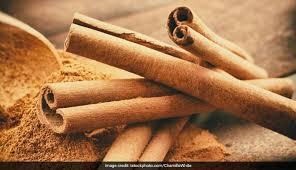 Ingredient 6: Cinnamomum verum / Dalchini
Cinnamomum verum / Dalchini
regulate blood sugar, aids digestion, and boasts powerful anti-inflammatory and antioxidant properties.
Cinnamomum verum, also known as true cinnamon or Ceylon cinnamon is a small evergreen tree belonging to the family Lauraceae, native to Sri Lanka. The inner bark of the tree is historically regarded as the spice cinnamon, though this term was later generalized to include C. cassia as well.
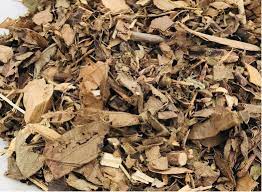 Ingredient 7: Dashmool
Dashmool
alleviate chronic inflammation and pain, and support post-natal recovery
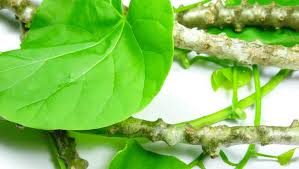 Ingredient 8: Tinospora cordifolia / Giloy
Tinospora cordifolia / Giloy
mmunity booster to fight infections, manage fevers (such as dengue or chronic ailments), improve digestion, and reduce joint inflammation
Tinospora cordifolia, guruchi, guduchi, amrita, or the heart-leaved moonseed, is a herbaceous vine of the family Menispermaceae native to South and Southeast Asia. It has been used in Ayurveda in an attempt to treat various disorders.
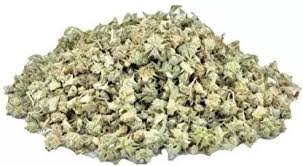 Ingredient 9: Tribulus terrestris / Gokhru
Tribulus terrestris / Gokhru
support kidney and urinary tract health, boost male reproductive wellness, and enhance physical stamina
Tribulus terrestris is an annual plant in the caltrop family (Zygophyllaceae) widely distributed around the world. It is adapted to thrive in dry climate locations in which few other plants can survive.
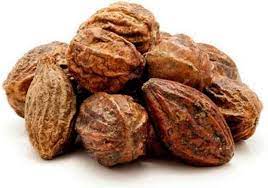 Ingredient 10: Terminalia chebula / Harde
Terminalia chebula / Harde
digestive, detoxifying, and rejuvenating properties, Respiratory Health
Terminalia chebula, commonly known as black- or chebulic myrobalan, is a species of Terminalia, native to South Asia from India, Pakistan and Nepal east to southwest China (Yunnan), and south to Sri Lanka, Malaysia, and Vietnam.
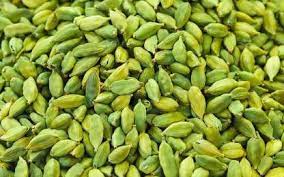 Ingredient 11: Elettaria cardamomum / elaichi
Elettaria cardamomum / elaichi
Digestive Aid, Oral Health, Respiratory Relief, Blood Pressure Support
Elettaria cardamomum, commonly known as green cardamom or true cardamom, is a herbaceous, perennial plant in the ginger family, native to southern India. It is the most common of the species whose seeds are used as a spice called cardamom that has a strong aroma used in both savory and sweet cooking. It is cultivated widely in tropical regions and reportedly naturalized in Réunion, Indochina, and Costa Rica.
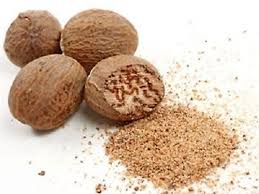 Ingredient 12: Myristica fragrans / Jaifal
Myristica fragrans / Jaifal
Digestive Aid, Sleep & Mood, Pain Relief, skin care
Myristica fragrans, commonly known as the nutmeg tree, is an evergreen species indigenous to the Maluku Islands of Indonesia. This aromatic tree is economically significant as the primary source of two distinct spices: nutmeg, derived from its seed, and mace, obtained from the seed's aril.
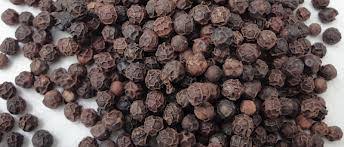 Ingredient 13: Piper nigrum / Kali Mirch
Piper nigrum / Kali Mirch
stimulates digestive enzymes, enhances nutrient absorption (particularly curcumin), and provides powerful anti-inflammatory and antioxidant benefits to support overall wellness
Black pepper is a flowering vine in the family Piperaceae, cultivated for its fruit, which is usually dried and used as a spice and seasoning. The fruit is a drupe (stonefruit) which is about 5 mm in diameter, dark red, and contains a stone which encloses a single pepper seed. Peppercorns and the ground pepper derived from them may be described simply as pepper, or more precisely as black pepper, green pepper, or white pepper.
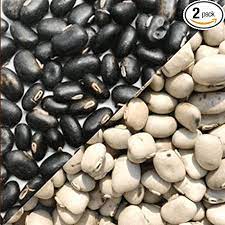 Ingredient 14: Mucuna pruriens / Kaunch Beej
Mucuna pruriens / Kaunch Beej
boost libido, enhance male fertility, and support nervous system health,
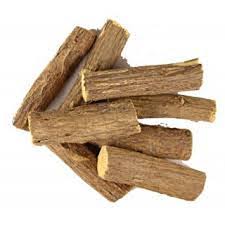 Ingredient 15: Glycyrrhiza glabra / Mulethi
Glycyrrhiza glabra / Mulethi
soothe sore throats, heal digestive ulcers, balance hormones, and improve skin health
Liquorice or licorice is the common name of Glycyrrhiza glabra, a flowering plant of the bean family Fabaceae, from the root of which a sweet, aromatic flavouring is extracted.
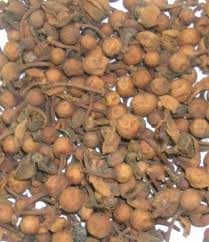 Ingredient 16: Mesua ferrea / Nagkesar
Mesua ferrea / Nagkesar
manage respiratory issues like asthma and coughs, control bleeding disorders, treat skin infections, and soothe joint pain.
Mesua ferrea, the Ceylon ironwood, or cobra saffron, is a species in the family Calophyllaceae native to the Indomalayan realm. This slow-growing tree is named after the heaviness and hardness of its timber. It is widely cultivated as an ornamental for its graceful shape, grayish-green foliage with a striking pink to red flush of drooping young leaves, and its large, fragrant white flowers. It is the national tree of Sri Lanka, as well as the state tree of Mizoram and state flower of Tripura in India.
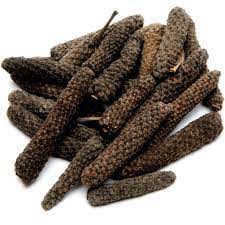 Ingredient 17: Piper
Piper
treat respiratory conditions, improve digestion, and manage pain
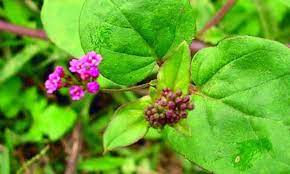 Ingredient 18: Boerhavia diffusa / Punarnava
Boerhavia diffusa / Punarnava
support kidney function, reduce fluid retention (edema), protect the liver, and manage joint pain
Boerhavia diffusa is a species of flowering plant in the four o'clock family which is commonly known as punarnava, red spiderling, spreading hogweed, or tarvine. It is taken in herbal medicine for pain relief and other uses. The leaves of Boerhavia diffusa are often used as a green vegetable in many parts of India.
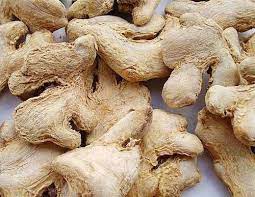 Ingredient 19: Zingiber officinale / Sonth ( dried ginger powder)
Zingiber officinale / Sonth ( dried ginger powder)
soothing digestive issues, relieving cold and cough symptoms, and reducing inflammation
Ginger is a flowering plant whose rhizome, ginger root or ginger, is widely used as a spice and a folk medicine. It is an herbaceous perennial that grows annual pseudostems about one meter tall, bearing narrow leaf blades. The inflorescences bear flowers having pale yellow petals with purple edges, and arise directly from the rhizome on separate shoots.
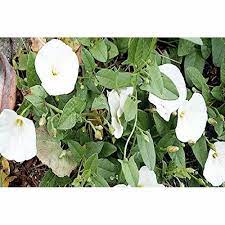 Ingredient 20: Convolvulus pluricaulis / Shankhpushpi
Convolvulus pluricaulis / Shankhpushpi
natural brain tonic that supports cognitive function and calms the nervous system
Convolvulus prostratus is an herb found in India and Burma that is used in Ayurveda. In Ayurveda it is known as shankhpushpi and the preparation shankapushpi is, according to most sources, identical with Convolvulus prostratus, but some say shankapushpi is instead Clitoria ternatea (अपराजिता). Some also say Shankhapushpi is Evolvulus alsinoides, which is another plant of the same family. It has been used traditionally as a brain tonic and is believed to help a wide range of issues. It is believed to have demonstrated potential for anxiolytic, relaxant, and anti-obsessive effects, as well as nootropic effects.
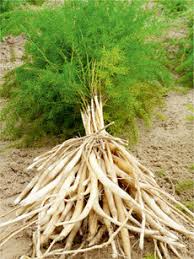 Ingredient 21: Asparagus racemosus / Shatavari
Asparagus racemosus / Shatavari
balance hormones, enhance female reproductive health, boost lactation, and alleviate stress.
Asparagus racemosus is a species of asparagus native from Africa through southern Asia, including the Indian subcontinent, to northern Australia. It grows 1–2 m tall and prefers to take root in gravelly, rocky soils high up in piedmont plains, at 1,300–1,400 m (4,300–4,600 ft) elevation. It was botanically described in 1799.88
 Ingredient 22: Asphaltum punjabianum / shilajit
Asphaltum punjabianum / shilajit
boost energy and stamina, enhance male fertility, and manage stress
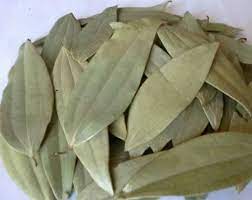 Ingredient 23: Cinnamomum tamala / Tejpatta
Cinnamomum tamala / Tejpatta
aid digestion, regulate blood sugar, and relieve respiratory issues
Cinnamomum tamala, Indian bay leaf, also known as tejpat, tejapatta, Malabar leaf, Indian bark, Indian cassia, or malabathrum, is a tree in the family Lauraceae that is native to northern India, Bangladesh, Nepal, Myanmar, Laos, Vietnam, and southwestern China. It can grow up to 20 m (66 ft) tall. Its leaves have a clove-like aroma with a hint of peppery taste; they are used for culinary and medicinal purposes. It is thought to have been one of the major sources of the medicinal plant leaves known in classic and medieval times as malabathrum.
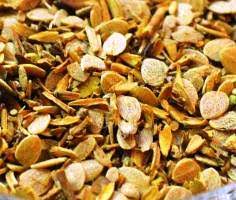 Ingredient 24: Blepharis edulis / Uttangan
Blepharis edulis / Uttangan
treat male reproductive health issues, digestive imbalances, and various skin conditions
Blepharis edulis is a species of plant in the family Acanthaceae. It is found in India, Pakistan and Iran as well as Egypt. It is a small plant, covered in soft, grey hairs. It has many serrated leaves, that have prickles attached to them. The flowers are a yellowish color. Its capsules contain two seeds, that are heart-shaped, smooth, shining, and brownish in color. In India, it is commonly known as Dakhni chappar or Utangan.
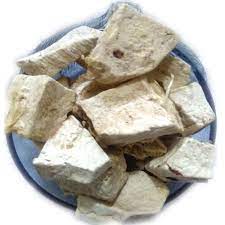 Ingredient 25: Pueraria tuberosa / Vidarikand
Pueraria tuberosa / Vidarikand
rejuvenator, general tonic, and immunity booster. It is widely used to promote physical strength, enhance male vitality, and increase breast milk production in postpartum women.
Pueraria tuberosa, commonly known as kudzu, Indian kudzu, or Nepalese kudzu, Vidarikand, Sanskrit: Bhukushmandi (भूकुशमंडी) is a climber with woody tuberculated stem. It is a climbing, coiling and trailing vine with large tuberous roots. The tubers are globose or pot-like, about 25 centimetres (9.8 in) across and the insides are white, starchy and mildly sweet. Leaves are trifoliate and alternate, while the leaflets are egg-shaped, with round base and unequal sides. They are 18 cm (7.1 in) long and 16 cm (6.3 in) wide and are hairless above. Flowers are bisexual, around 1.5 cm (0.59 in) across and blue or purplish-blue in color. The fruit pods are linear, about 2–5 cm (0.79–1.97 in) long and constricted densely between the seeds. They have silky, bristly reddish-brown hair. Seeds vary from 3 to 6 in number.
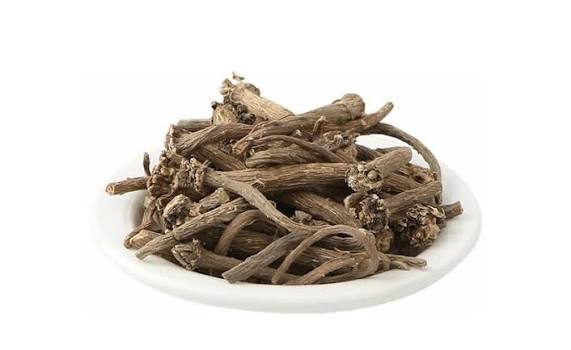 Ingredient 26: Anacyclus pyrethrum / Akarkara
Anacyclus pyrethrum / Akarkara
used as a nerve tonic and natural remedy for men's sexual wellness, dental issues, and digestive support
Anacyclus pyrethrum, the pellitory, Spanish chamomile, Mount Atlas daisy, bertram, or Akarkara, is a species of flowering plant in the daisy family Asteraceae. It is native to Mediterranean Europe and parts of North Africa, but also naturalised in other parts of Europe, India and Pakistan. This herbaceous perennial resembles chamomile species in habitat and appearance.