


Gynae Cure
An Ideal Combination For Female To Cure Leucorrhoea & General Health
Syrup
Reproductive System
₹178₹19810% OFF
Pack Size
Qty
In Stock1
Gynae Cure
₹178
Third-party testedRegularly certified & audited
GMP-certified facilityManufactured under audit
Free shippingOn orders ₹499+
Check Delivery
Enter your pincode to check if delivery is available to your area.
A Herbal Female Tonic
Gynae cure capsule is excellent non-hormonal feminine tonic, especially made to treat all type menstruation related gynecologic disorders.
- Balance female hormonal and regulate menstrual cycle naturally .
- Relieves mental and emotional tension during menstruation, hormonal change and menopause, reduces the side-effect of hormone therapy.
- Reduction in uterine contraction and protection from stress.
- Stop excessive white vaginal discharge, prevents excessive bleeding and regularize genital functioning, tones female organs improves feminine figure and luster.
Full Transparency
What is inside — and why
Every ingredient listed. Nothing hidden.
Ingredient Ledger
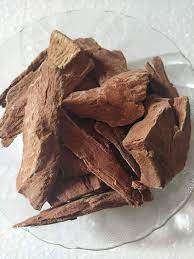
 Ingredient 1: Withania Somnifera / Ashwagandha root
Withania Somnifera / Ashwagandha root
lowering cortisol levels. It provides actionable relief for chronic stress and anxiety, enhances athletic endurance and muscle recovery, and promotes deeper sleep quality
 Ingredient 2: Terminalia arjuna / Arjun Chaal
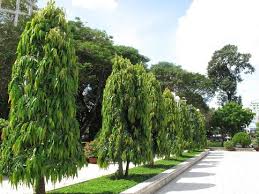
Terminalia arjuna / Arjun Chaal
Strengthens and tones heart muscles, regulates heartbeat, and helps manage chest discomfort or angina. Cholesterol & Blood Pressure, astringent and antibacterial properties , manage asthma and coughs, and aids in protecting liver cells from toxins
Terminalia arjuna is a tree of the genus Terminalia. It is commonly known as arjuna or arjun tree in English. It is used as a traditional medicinal plant.
 Ingredient 3: Saraca asoca / Ashok tree
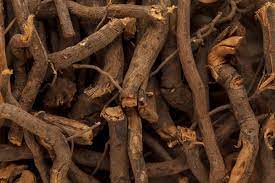
Saraca asoca / Ashok tree
Menstrual Disorders,strengthens the uterine muscles and regulates ovarian function.,Leucorrhoea
Saraca asoca, commonly known as the ashoka tree, is a plant belonging to the Detarioideae subfamily of the Fabaceae family of plants.
 Ingredient 4: Plumbago zeylanica / Chitrak
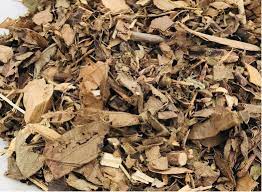
Plumbago zeylanica / Chitrak
boost digestion, stimulate metabolism, and manage respiratory and inflammatory conditions
Plumbago zeylanica, commonly known as Ceylon leadwort, doctorbush or wild leadwort, is a species of plumbago with a pantropical distribution. Carl Linnaeus described the paleotropical P. zeylanica and Neotropical P. scandens as separate species, but they are currently considered synonymous.
 Ingredient 5: Dashmool
Dashmool
alleviate chronic inflammation and pain, and support post-natal recovery
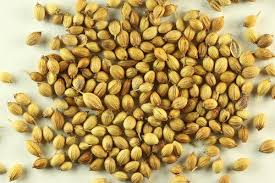 Ingredient 6: Coriander sativum / Dhaniya Seed
Coriander sativum / Dhaniya Seed
regulates Blood Sugar & Cholesterol,Digestive Aid
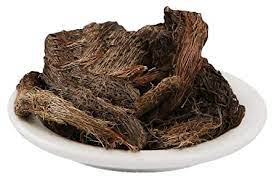 Ingredient 7: Nardostachys jatamansi / Jatamansi
Nardostachys jatamansi / Jatamansi
Mental Wellness & Sleep, Hair Care, Skin Vitality, Digestion & Circulation
Nardostachys is a genus of flowering plant in the honeysuckle family (Caprifoliaceae). Nardostachys jatamansi is the sole species in genus.
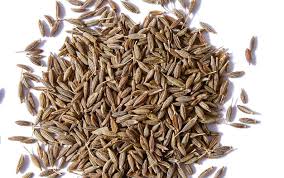 Ingredient 8: Cuminum cyminum / Jeera
Cuminum cyminum / Jeera
aiding digestion, balancing blood sugar, and boosting immunity
Cumin is a flowering plant in the family Apiaceae, native to the Irano-Turanian Region. Its seeds – each one contained within a fruit, which is dried – are used in the cuisines of many cultures in both whole and ground form. Although cumin is used in traditional medicine, there is no high-quality evidence that it is safe or effective as a therapeutic agent.
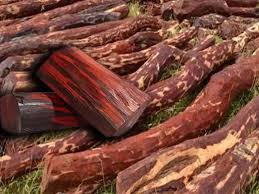 Ingredient 9: Pterocarpus santalinus / Lal Chandan
Pterocarpus santalinus / Lal Chandan
Acne & Blemish Control, Anti-aging & Toning, Soothing Irritation, Digestion & Ulcers, Blood Purification, Pain Relief.
Pterocarpus santalinus, with the common names red sanders, red saunders, Yerra Chandanam, Chenchandanam, red sandalwood, Rakta Chandana, and rakto chandon, is a species of Pterocarpus endemic to the southern Eastern Ghats mountain range of South India. It is known for its red colour and has been used for furniture, musical instruments, and traditional herbal medicine. Because of the high market value for its timber, the species has been overexploited, and illegal trade remains a problem. It is listed as Near Threatened on the IUCN Red List. It should not be confused with the aromatic Santalum sandalwood trees native to southern India.
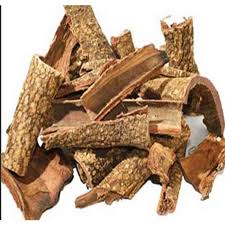 Ingredient 10: Symplocos racemosa / Lodhra
Symplocos racemosa / Lodhra
manage hormonal imbalances, heavy menstrual bleeding, and digestive issues
Symplocos racemosa is a species of plant in the family Symplocaceae. It is native to Southeast Asia.
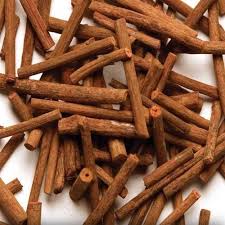 Ingredient 11: Rubia cordifolia / Manjistha
Rubia cordifolia / Manjistha
manage skin disorders, regulate menstrual health, promote lymphatic drainage, and support liver function
Rubia cordifolia, known as Indian madder, is a species of flowering plant in the coffee family, Rubiaceae. It has been cultivated for a red pigment derived from roots.
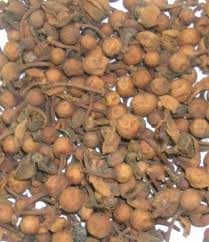 Ingredient 12: Mesua ferrea / Nagkesar
Mesua ferrea / Nagkesar
manage respiratory issues like asthma and coughs, control bleeding disorders, treat skin infections, and soothe joint pain.
Mesua ferrea, the Ceylon ironwood, or cobra saffron, is a species in the family Calophyllaceae native to the Indomalayan realm. This slow-growing tree is named after the heaviness and hardness of its timber. It is widely cultivated as an ornamental for its graceful shape, grayish-green foliage with a striking pink to red flush of drooping young leaves, and its large, fragrant white flowers. It is the national tree of Sri Lanka, as well as the state tree of Mizoram and state flower of Tripura in India.
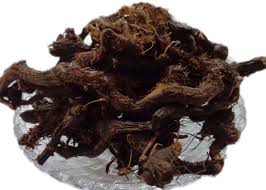 Ingredient 13: Cyperus rotundus / Nagarmotha
Cyperus rotundus / Nagarmotha
treat gastrointestinal issues, relieve menstrual cramps, manage skin conditions, and support weight management.
Cyperus rotundus is a species of sedge (Cyperaceae) native to Africa, southern and central Europe, and southern Asia. The word cyperus derives from the Greek κύπερος, kyperos, and rotundus is from Latin, meaning "round". The earliest attested form of the word cyperus is the Mycenaean Greek 𐀓𐀞𐀫, ku-pa-ro, written in Linear B syllabic script.
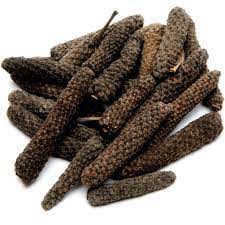 Ingredient 14: Piper
Piper
treat respiratory conditions, improve digestion, and manage pain
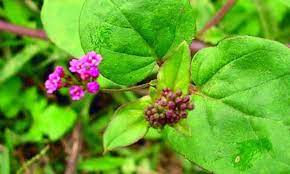 Ingredient 15: Boerhavia diffusa / Punarnava
Boerhavia diffusa / Punarnava
support kidney function, reduce fluid retention (edema), protect the liver, and manage joint pain
Boerhavia diffusa is a species of flowering plant in the four o'clock family which is commonly known as punarnava, red spiderling, spreading hogweed, or tarvine. It is taken in herbal medicine for pain relief and other uses. The leaves of Boerhavia diffusa are often used as a green vegetable in many parts of India.
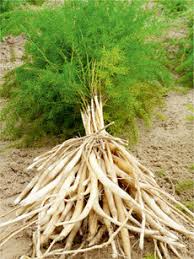 Ingredient 16: Asparagus racemosus / Shatavari
Asparagus racemosus / Shatavari
balance hormones, enhance female reproductive health, boost lactation, and alleviate stress.
Asparagus racemosus is a species of asparagus native from Africa through southern Asia, including the Indian subcontinent, to northern Australia. It grows 1–2 m tall and prefers to take root in gravelly, rocky soils high up in piedmont plains, at 1,300–1,400 m (4,300–4,600 ft) elevation. It was botanically described in 1799.88
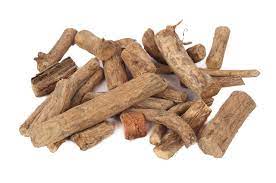 Ingredient 17: Argyreia nervosa / Vidhara
Argyreia nervosa / Vidhara
treat wounds, improve cognitive health, support digestion, and manage joint pain or inflammation.
Argyreia nervosa is a perennial climbing vine native to the Indian subcontinent and introduced to numerous areas worldwide, including Hawaii, Africa, and the Caribbean. Though it can be invasive, it is often prized for its aesthetic and medicinal value. Common names include elephant creeper, woolly morning glory and Hawaiian baby woodrose. Its seeds are known for their powerful entheogenic properties, greater or similar to those of Ipomoea species, with users reporting significant psychedelic and spiritual experiences. The two botanical varieties are Argyreia nervosa var. nervosa described here, and Argyreia nervosa var. speciosa, the roots of which are used in Ayurvedic medicine.
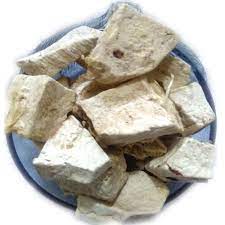 Ingredient 18: Pueraria tuberosa / Vidarikand
Pueraria tuberosa / Vidarikand
rejuvenator, general tonic, and immunity booster. It is widely used to promote physical strength, enhance male vitality, and increase breast milk production in postpartum women.
Pueraria tuberosa, commonly known as kudzu, Indian kudzu, or Nepalese kudzu, Vidarikand, Sanskrit: Bhukushmandi (भूकुशमंडी) is a climber with woody tuberculated stem. It is a climbing, coiling and trailing vine with large tuberous roots. The tubers are globose or pot-like, about 25 centimetres (9.8 in) across and the insides are white, starchy and mildly sweet. Leaves are trifoliate and alternate, while the leaflets are egg-shaped, with round base and unequal sides. They are 18 cm (7.1 in) long and 16 cm (6.3 in) wide and are hairless above. Flowers are bisexual, around 1.5 cm (0.59 in) across and blue or purplish-blue in color. The fruit pods are linear, about 2–5 cm (0.79–1.97 in) long and constricted densely between the seeds. They have silky, bristly reddish-brown hair. Seeds vary from 3 to 6 in number.
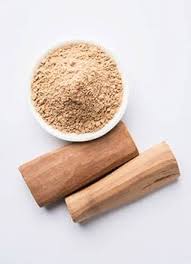 Ingredient 19: Santalum album / Safed Chandan
Santalum album / Safed Chandan
potent antibacterial, anti-inflammatory, and cooling properties, soothe irritated skin, relieve headaches, treat respiratory issues
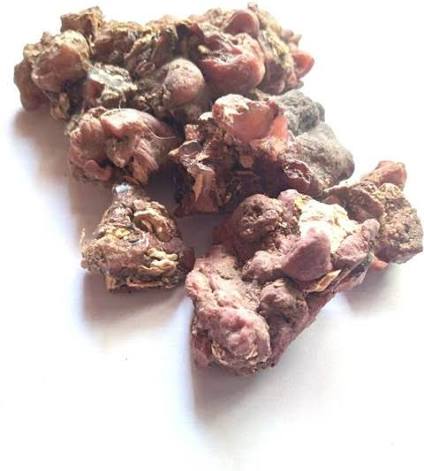 Ingredient 20: Areca catechu / Supari Phool
Areca catechu / Supari Phool
Used as a uterine tonic. It is traditionally used to support female reproductive health, manage menstrual irregularities, treat leucorrhea (white discharge), and aid postpartum recovery. Flower are utilized for their purported anti-inflammatory, detoxifying, and respiratory-supporting properties.
Areca catechu is a species of palm native to the Philippines cultivated for areca nuts. It was carried widely through the tropics by the Austronesian migrations and trade since at least 1500 BCE due to its use in betel nut chewing. It is widespread in cultivation and is considered naturalized in much of tropical Asia and in Taiwan, southern China, Madagascar, parts of the Pacific Islands, and also in the West Indies.
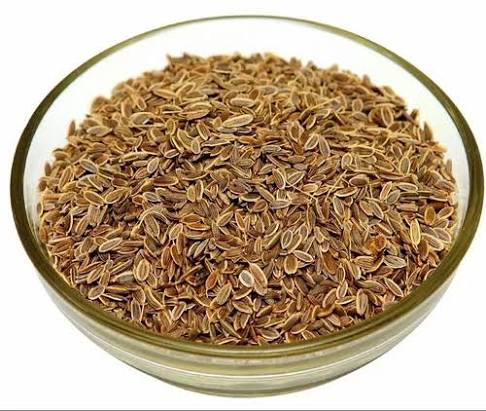 Ingredient 21: Anethum graveolens / Sua
Anethum graveolens / Sua
soothe abdominal bloating, regulate menstrual irregularities, and ease digestive discomfort, help regulate irregular menstruation and alleviate menstrual cramps or headaches , it have natural soothing and anti-inflammatory qualities
Dill is an annual herb in the celery family Apiaceae. Native to North Africa and West Asia, dill is grown widely in Eurasia, where its leaves and seeds are used as a herb or spice for flavouring food.
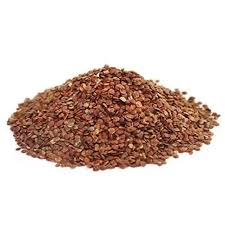 Ingredient 22: Asteracantha longifolia / Talmakhana
Asteracantha longifolia / Talmakhana
Acts as a natural aphrodisiac, helps improve sperm count and quality (oligospermia), and enhances overall libido and stamina, soothe urinary tract infections, reduce burning sensations, and assist in flushing out kidney and bladder stone, Helps eliminate excess uric acid, making it beneficial in the management of gout and arthritis pain, Nourishes the body and reduces fatigue
Hygrophila auriculata is a herbaceous, medicinal plant in the acanthus family that grows in marshy places and is native to tropical Asia and Africa. In India it is commonly known as kokilaksha or gokulakanta, in Sri Lanka as neeramulli. In Kerala and Tamil Nadu it is called vayalchulli (വയൽച്ചുളളി) and Neermulli (நீர்முள்ளி) respectively, and in the Telugu states, it is known as Godugu-gaddi (గొడుగుగడ్డి) or Gruddi-kamanchi (గ్రుడ్డికామంచి).
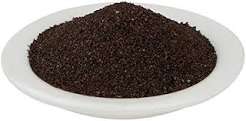 Ingredient 23: Argyreia speciosa / Samudra Sosh
Argyreia speciosa / Samudra Sosh
potent aphrodisiac to boost stamina, improve semen quality, and treat conditions like oligospermia. It is often found in Ayurvedic formulations designed for male vitality, Wound Healing & Skin, help manage neurodegenerative disorders and nerve weakness, general tonic to combat physical and psychological fatigue, control diabetes and manage leucorrhea or fever
Argyreia nervosa is a perennial climbing vine native to the Indian subcontinent and introduced to numerous areas worldwide, including Hawaii, Africa, and the Caribbean. Though it can be invasive, it is often prized for its aesthetic and medicinal value. Common names include elephant creeper, woolly morning glory and Hawaiian baby woodrose. Its seeds are known for their powerful entheogenic properties, greater or similar to those of Ipomoea species, with users reporting significant psychedelic and spiritual experiences. The two botanical varieties are Argyreia nervosa var. nervosa described here, and Argyreia nervosa var. speciosa, the roots of which are used in Ayurvedic medicine.
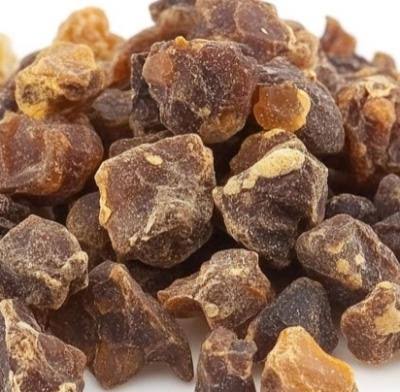 Ingredient 24: Commiphora myrrha / Heera Bol
Commiphora myrrha / Heera Bol
anti-inflammatory, antimicrobial, and blood-purifying properties, relieve muscular and joint pain, as well as to soothe lower backaches in women after childbirth.natural expectorant to clear mucus, easing chest congestion, coughs, and bronchitis
Commiphora myrrha, called myrrh, Somali myrrh, herabol myrrh, common myrrh, is a tree in the family Burseraceae. It is one of the primary trees used in the production of myrrh, a resin made from dried tree sap. The Commiphora myrrha tree is indigenous to Somalia, in the Somali regions of Ethiopia and Kenya, Djibouti, Eritrea and parts of the Arabian Peninsula.
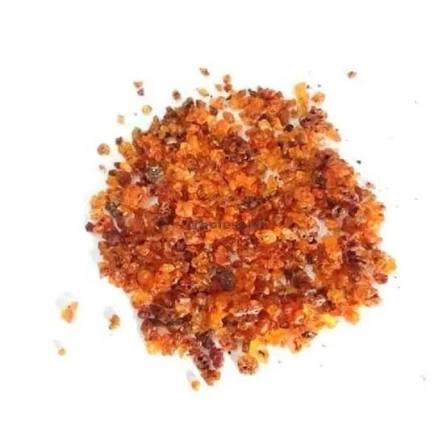 Ingredient 25: Kerria lacca / Laksha
Kerria lacca / Laksha
accelerating bone tissue regeneration, and managing conditions like osteoporosis, hemostatic properties help stop internal and external bleeding and seal cuts to prevent infections, treat eczema, herpes, scabies, and chronic ulcers while improving skin tone, prescribed for diarrhea, intestinal parasites, liver support, and respiratory issues like cough
Kerria lacca is a species of insect in the family Kerriidae, the lac insects. These are in the superfamily Coccoidea, the scale insects. This species is perhaps the most commercially important lac insect, being a main source of lac, a resin which can be refined into shellac and other products. This insect is native to Asia.
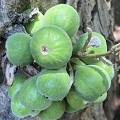 Ingredient 26: Ficus racemosa / Utambar
Ficus racemosa / Utambar
treat hyperacidity, diarrhea, and digestive disorders ,reduce swelling, soothe mumps, and heal wounds and ulcers, manage conditions like leucorrhea, heavy menstruation (menorrhagia), and post-partum care, lower blood sugar levels and reduce internal body heat
Ficus racemosa, the cluster fig, red river fig, udumbara, audumbara, or gular, is a species of plant in the mulberry family Moraceae. It is native to tropical Asia and Australia. It is a fast-growing plant with large, very coarse leaves, attaining the size of a large shrub or even larger in old specimens. A distinctive feature of its growth habit is the cauliflorous nature of its fruiting, where the syconia (figs) grow in dense clusters directly from the trunk and larger branches. The ripe figs are a favourite food of the rhesus macaque, and the plant also serves as a host for the caterpillars of the two-brand crow butterfly of northern Australia.
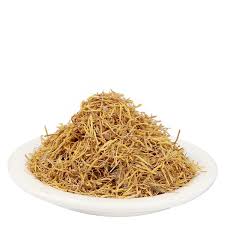 Ingredient 27: Nelumbo nucifera / kamal kesar
Nelumbo nucifera / kamal kesar
protect the body from oxidative stress and damage caused by free radicals. Kamal Kesar has been shown to have calming effects on the nervous system, making it a valuable tool for managing stress and anxiety. It can help improve skin texture, reduce blemishes, and provide hydration to the skin.
Nelumbo nucifera, also known as Padma or Kamala, sacred lotus, pink lotus, Indian lotus, or simply lotus, is one of two extant species of aquatic plant in the family Nelumbonaceae. It is sometimes colloquially called a water lily, though this more often refers to members of the family Nymphaeaceae. The lotus belongs in the order Proteales.
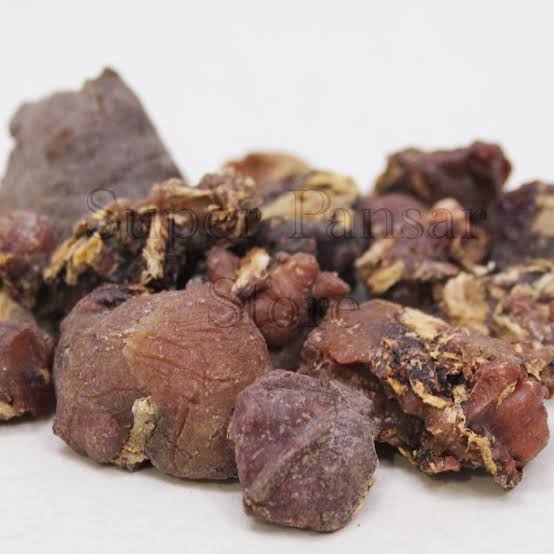 Ingredient 28: Bombax ceiba / Mochras
Bombax ceiba / Mochras
astringent, cooling, and anti-inflammatory properties, astringent, cooling, and anti-inflammatory properties, Skin & Tissue Care, Wound Healing & Bleeding
Bombax ceiba, like other trees of the genus Bombax, is commonly known as cotton tree. More specifically, it is sometimes known as Malabar silk-cotton tree; red silk-cotton; red cotton tree; or ambiguously as silk-cotton or kapok, both of which may also refer to Ceiba pentandra.


